

Before you begin
- Jumper is installed and running
- You have media analyzed in Jumper
- Your computer can run a local AI model
Setting it up
1
Install Bionic
Download it from lmstudio.ai/bionic and install it like any other app.
2
Download a model
Open the model picker and download a Local model, meaning one that runs on your own machine rather than in the cloud.Two labels matter when you are choosing:
- Tool Use. Required. Without it, the model cannot operate Jumper at all.
- Vision. Recommended. This is what lets the agent look at your footage.
Cloud and remote models
Cloud and remote models
Bionic also runs Cloud models, which are larger and faster but billed to your account. It can use Remote models as well, running on another computer on your network over LM Link.Both work with Jumper. Only Local keeps everything on this machine.
3
Connect Jumper
Go to Settings → Connected Apps, find Manual MCP server setup, and click + Add custom MCP.Fill in the configuration: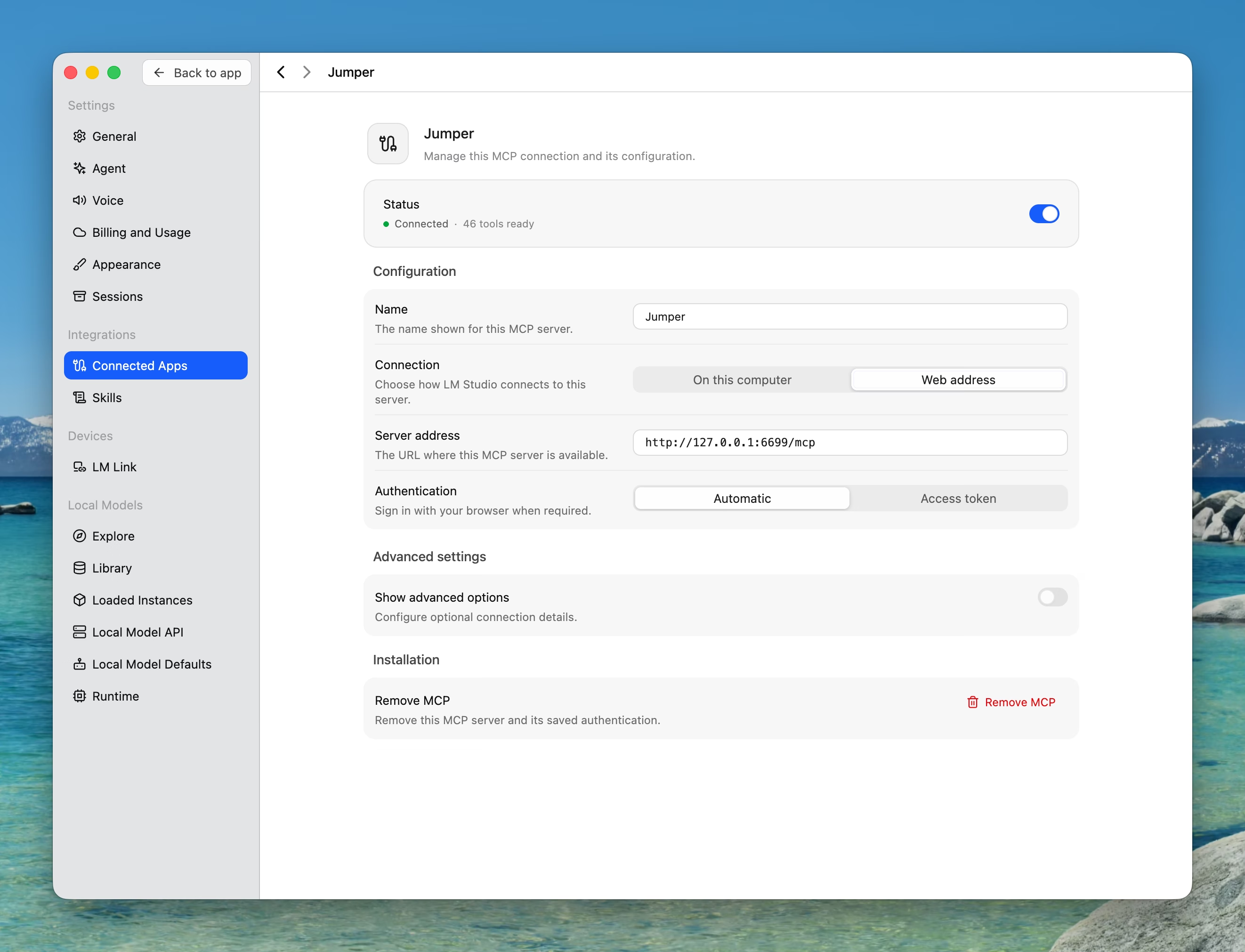
- Name:
Jumper - Connection: Web address. Jumper runs as a local server rather than a command, so On this computer is the wrong option here.
- Server address:
http://127.0.0.1:6699/mcp - Authentication: Automatic
Prefer to edit a config file?
Prefer to edit a config file?
Bionic reads the same Because the two apps share this file, setting Jumper up in one of them configures it in the other.
mcp.json that LM Studio uses, which lives at ~/.lmstudio/mcp.json on macOS:Already followed the LM Studio guide? Then Jumper is configured already, since Bionic reads the same settings. Check that Jumper appears under Connected Apps and move on.
4
Let it see your footage
An agent that cannot see its own results is guessing from filenames, metadata, and search scores. One that can see will judge the shot, which is the difference between finding footage and finding the right footage.If the model you downloaded has Vision, you are already covered. Skip ahead.If it does not, Bionic can borrow a second model just for looking at pictures. Turn on the Vision Subagent in settings and choose a vision-capable model for it. You will see “Asking vision subagent…” whenever the agent stops to look at something.
5
Try it
Start a session and ask something simple:A working setup answers by describing what it can do with your footage. A broken one tells you it has no access.Then try a real request:That exercises search, thumbnails, and the agent’s ability to look at frames in a single go. If it works, you are set up.
What you can ask for
The agent searches by what a shot looks like, by what is said in it, and by who appears in it. It can export clips for you, and it can read a timeline out of Premiere Pro, DaVinci Resolve, or Avid Media Composer and send an edited version back. See Agentic video editing for the full picture, and Timeline import and export for round-trips with your NLE.If something is not working
Jumper does not show up, or says it failed to connect
Jumper does not show up, or says it failed to connect
Jumper itself has to be running, because the connection only exists while the app is open. Open Jumper, then restart Bionic.If you added Jumper by editing
mcp.json by hand, check that the file is still valid JSON. A stray comma is enough to stop it loading.The agent acts like it has never heard of Jumper
The agent acts like it has never heard of Jumper
Two things to check. First, that your model has Tool Use, because without it the model cannot call Jumper however it is configured. Second, that Jumper is switched on under Settings → Connected Apps.
It finds footage, but picks bad shots
It finds footage, but picks bad shots
It cannot see what it found. Either switch to a model with Vision, or turn on the Vision Subagent as described above.
Searches give up or time out
Searches give up or time out
Searching a large library can take longer than Bionic is willing to wait. The default is 60 seconds, which is not always enough, so raise Request timeout (seconds) in settings.
Everything is slow, or the model will not load
Everything is slow, or the model will not load
The model is too big for your machine. Download a smaller size, or lower the context length in the model’s load settings.
Descriptions of shots are completely wrong
Descriptions of shots are completely wrong
Jumper asks the local server to describe frames, and it uses the first model the server reports. If you have an embedding model loaded alongside your vision model, unload it so the vision model is the one answering.
For the curious
How Bionic and Jumper talk to each other
How Bionic and Jumper talk to each other
Jumper runs a local server at
http://127.0.0.1:6699/mcp, which is the same mechanism Claude and Codex use to talk to it.Adding Jumper under Connected Apps points Bionic at that address. Both ends sit on 127.0.0.1, so nothing leaves your machine.How the agent sees a frame
How the agent sees a frame
Jumper’s LM Studio requires you to start the same server by hand from the menu bar every time. Bionic does not.One consequence is worth knowing:
get_thumbnail tool writes a JPEG to disk and returns the path to it. The describe_thumbnail tool then sends that image to a local OpenAI-compatible server on port 1234, and the short description that comes back is what the agent actually reads.Bionic starts that server itself, with just-in-time model loading, so there is nothing to switch on. You will find it under Settings → Local Model API, or you can confirm it from a terminal:describe_thumbnail uses the first model the server reports, which is why a stray embedding model can break the descriptions.Bionic’s vision subagent is a separate mechanism. It handles images inside the conversation itself, which is how a text-only main model can still reason about what a shot contains.How this compares to the LM Studio setup
How this compares to the LM Studio setup
Both work well. Bionic needs less setup and handles long, multi-step jobs more gracefully, while LM Studio’s chat window is a friendlier place to experiment with a lot of different models.
Related
All local agent guides
Other agent apps you can use with Jumper

LM Studio
The same setup in LM Studio’s chat app
Agentic video editing
Overview of how AI agents use Jumper
Agentic editing and data privacy
What stays local and what the model actually receives